
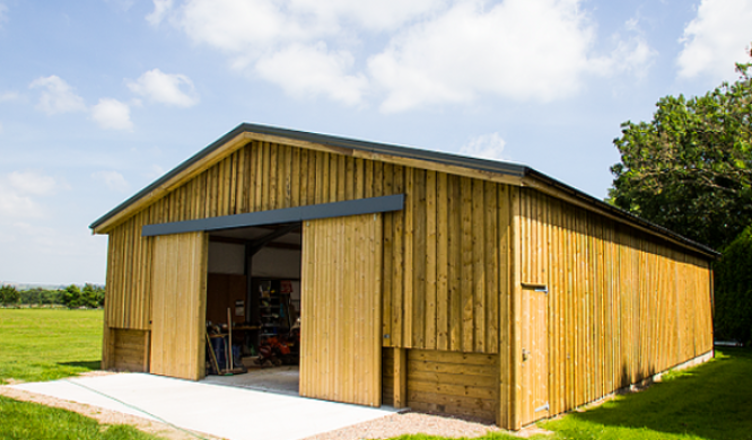
Agricultural Buildings Planning Permission Cornwall & Devon
Planning permission for an agricultural building involves specific rules called Permitted Development Rights (PDRs), allowing farmers to build or extend buildings for farming without full permission, provided they meet criteria like size (e.g., under 12m high), location (not near trunk roads), and genuine agricultural use (e.g., storage, livestock). Full permission is usually needed for changes of use (like turning a barn into a house, under Class Q PDR) or if PDRs aren't met, requiring applications like a Prior Approval (DPA) for smaller details or full planning.
When You Might NOT Need Full Permission (Using PDRs)
New Buildings/Extensions: For farm buildings (machinery, storage, livestock) on land over 5 hectares, with size/height limits and distance rules from classified roads.
Conversions (Class Q): Turning existing farm buildings into homes (up to 10 dwellings, 1000sqm total) requires Prior Approval but avoids full planning for the structure itself.
Change of Use (Class R): Converting barns to commercial uses (shops, offices, leisure) under specific conditions.
When You DO Need Full Permission
Change of Use: If you're changing the use from farming to something unrelated (e.g., a new business not covered by PDRs).
Building a House: Building a new dwelling on agricultural land.
Exceeding Limits: If the building exceeds height or size limits, or is in a sensitive area (like a National Park).
Specific Operations: For large excavations or developments on Article 2(3) land (protected landscapes).
How to Apply for Approval
● Prior Approval (DPA): For many PDRs (like Class Q), you apply for approval on details (location, design) through a simplified process with your local council.
● Full Planning Permission: For cases outside PDRs, a standard application on the Planning Portal website, including plans, forms, fees, and potentially flood risk assessments, is required.
In essence, PDRs offer streamlined processes for farming-related developments, but strict rules apply, especially concerning scale, location, and purpose.
Agricultural Building Planning Drawings and Plans
If you wish to undertake your own planning application or have a building provider who will do the application for you, we can provide the necessary drawings and plans required for your application. Get in touch for a quote.
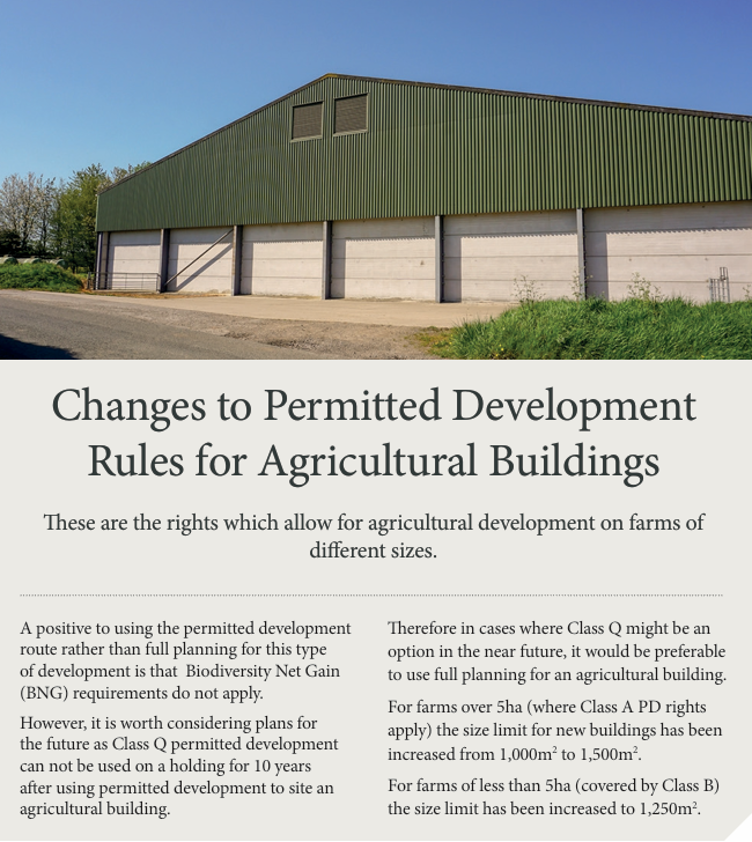
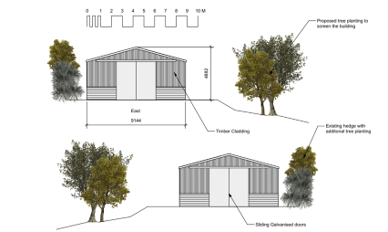
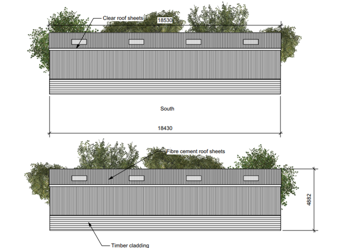
Case Studies
Frequently Asked Questions
-
Permitted development (PD) rights allow certain agricultural buildings to be converted or altered without a full planning application, provided they meet national criteria relating to factors such as size, height, location, landholding and proposed use. A prior approval process with the local council may still be required to assess specific impacts. Where these criteria are not met—such as on smaller holdings, for major structures, or in sensitive areas including National Parks and National Landscapes (formerly AONBs)—full planning permission is generally required. Unlike PD, which operates under nationally defined rights, a full planning application involves a formal assessment by the local planning authority, including consideration of environmental, visual, traffic and other site-specific impacts.
-
● Farm Size: The agricultural unit must be 5 hectares (approx. 12.5 acres) or more for standard Part 6 Class A rights.
● Dimensions: New buildings generally cannot exceed 12 meters in height or 1,500 square meters in total ground area (under recent updates).
● Location Limits: Must be more than 25 meters from a classified road and, if housing livestock or muck, over 400 meters from a protected neighboring dwelling.
● Prior Notification: Even under PD, you must often submit a "Prior Approval" application so the local planning authority can check the siting, design, and external appearance.
-
Small Holdings: Holdings under 0.4 hectares have no agricultural PD rights, and units between 0.4 and 5 hectares face severe restrictions.
Designated Areas: Stricter rules apply in the South West of England if the land sits within a National Park (e.g., Dartmoor or Exmoor) or a National Landscape (formerly AONB).
Proximity to Roads: Building within 25 meters of a metalled portion of a classified or trunk road.
Exceeding Limits: Structures taller than 12 meters or footprints larger than allowed thresholds.
In certain circumstances, landowners may choose not to use their permitted development rights if they intend to use other permitted development on their property in the future such as Class Q permitted development to convert agricultural buildings to residential. We would advise always seeking advice in this regard in the first instance.